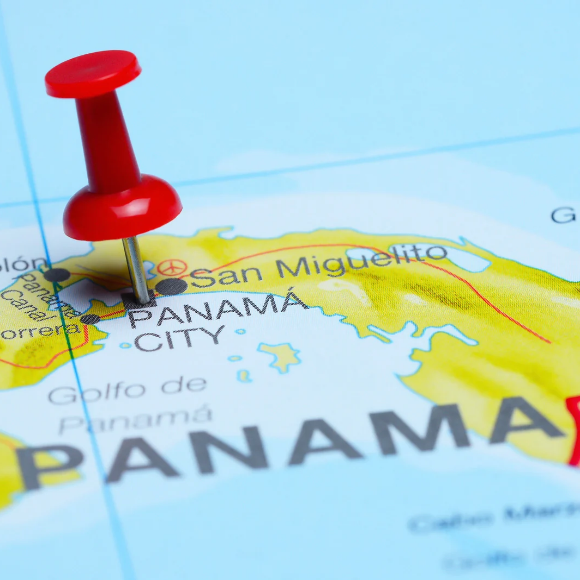
Panama may lay at the crossroads of two continents, but the country’s appeal extends well beyond its strategic location. Tropical forests, mountainous landscapes and rich biodiversity provide a natural foundation for tourism, while a population of approximately 4.6 million brings together Indigenous traditions and Afro-Caribbean influences. Panama’s cultural richness comes alive in community celebrations and enduring craftsmanship, exemplified by the intricately woven sombrero pintao, a cherished symbol of regional identity.
Spanish is Panama’s official language, and the country is governed as a representative republic with executive, legislative and judicial branches. Independence from Colombia in 1903 marked the beginning of a new chapter, which was followed by U.S.-led canal construction in 1904. Opened in 1914, the Panama Canal is renowned for transforming the country into a maritime crossroads and securing its enduring place at the heart of global commerce.
Panama’s Economy: Dollar Foundations, Global Connections
Services account for around 80% of Panama’s GDP, led by transport, logistics, finance, commerce and tourism. A regional financial center, Panama has no traditional central bank or independent monetary policy. Under its monetary system, which was established in 1904, Panama uses U.S. dollar banknotes alongside balboa coins valued at parity.
The Panama Canal anchors a logistics network of ports, warehouses and distribution centers, extending economic activity beyond transit tolls. Near the canal’s Atlantic entrance, the Colón Free Zone supports re-exports through duty-free importing, storage, repackaging and redistribution to international markets.
The Panama Canal: A Global Trade Artery and Economic Anchor
The Panama Canal connects the Atlantic and Pacific Oceans, shortening shipping journeys and reducing transport costs. Serving 180 maritime routes across 170 countries, the canal recorded 13,404 vessel transits in fiscal 2025, underscoring Panama’s importance in global supply chains.
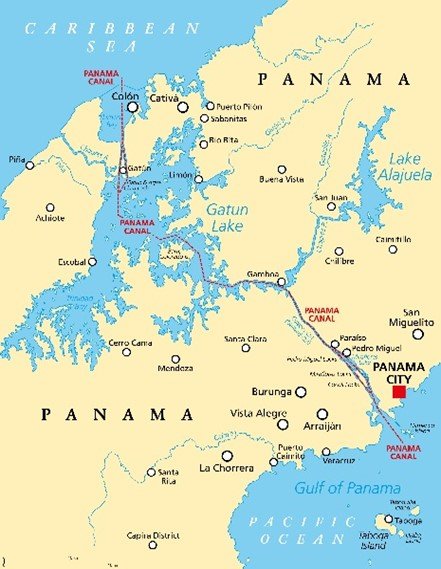
Under full Panamanian control since December 31, 1999, the canal anchors the country’s maritime and logistics economy. The Panama Canal’s benefits extend beyond toll revenues through employment, local procurement and related commercial activity. Revenues from the canal reached approximately US$5.7 billion in fiscal 2025, contributing around 6% of Panama's GDP.
The canal handles hundreds of billions of dollars in annual trade, supporting U.S. supply chains and Panama’s role as a regional trade hub. The strategic importance of the canal also fuels U.S.–China tensions, with Washington seeking to counter Chinese influence over nearby ports, which operate separately from the Panamanian-owned waterway.
Panama’s Capital Markets: Local Leaders, Global Reach
The Latin American Stock Exchange (Latinex), Panama’s principal securities exchange, provides trading in equities, corporate and government bonds, and investment funds. It publishes the Latinex Stock Index (LTXSI), which is the main stock market benchmark for listed companies in Panama.
Panamanian companies are represented in the MarketVector™ Total Global Equity Index (MVTGLE). Prominent domestic listings, which play a significant role in banking, financial services, and the broader economic development in Panama include:
- Grupo Financiero BG (BGFG): the parent of Banco General, one of Panama's largest private banks, providing retail, corporate and investment banking services. The average daily liquidity is above USD 200,000.
- Empresa General de Inversiones (EGI): Panamanian investment holding company with interests in financial services and other businesses, with average daily liquidity above USD 200,000.
Internationally listed Panamanian companies generally offer significantly greater trading liquidity than domestic Latinex listings, with notable examples recording average daily trading values exceeding USD 1 million. These include:
- Copa Holdings (NYSE: CPA): leading Latin American airline group operating through Panama's strategic aviation hub.
- Bladex (NYSE: BLX): multinational bank supporting regional trade and economic integration since it began operations in 1979.
Geopolitical interest in regional infrastructure, particularly between the U.S. and China, remains a factor to watch. In capital markets, internationally listed Panamanian companies such as Copa and Bladex currently offer the greatest liquidity, while any growth in trading depth on Latinex could broaden access to domestic names over time.
Figure 1: Performance of Panama Constituents in MVTGLE (Prices in USD), and Latinex Stock Index (LTXSI) - since 31 December, 2021
Source: MarketVector. Data as of October, 2026
About the Author(s):
Gent Pocesta is a Senior Index Specialist at MarketVector Indexes, where he conducts in-depth research, development, and ongoing maintenance of indexes spanning all asset classes. Gent holds a Master’s Degree in International Economics and Public Policy, and a Bachelor's Degree in Business Administration, where he brings a strong analytical foundation to his market insights and index strategy commentary.
For informational and advertising purposes only. The views and opinions expressed are those of the authors but not necessarily those of MarketVector Indexes GmbH. Opinions are current as of the publication date and are subject to change with market conditions. Certain statements contained herein may constitute projections, forecasts, and other forward-looking statements that do not reflect actual results. It is not possible to invest directly in an index. Exposure to an asset class represented by an index is available through investable instruments based on that index. MarketVector Indexes GmbH does not sponsor, endorse, sell, promote, or manage any investment fund or other investment vehicle that is offered by third parties and that seeks to provide an investment return based on the performance of any index. The inclusion of a security within an index is not a recommendation by MarketVector Indexes GmbH to buy, sell, or hold such security, nor is it considered to be investment advice.
Get the latest news & insights from MarketVector
Get the newsletterRelated: