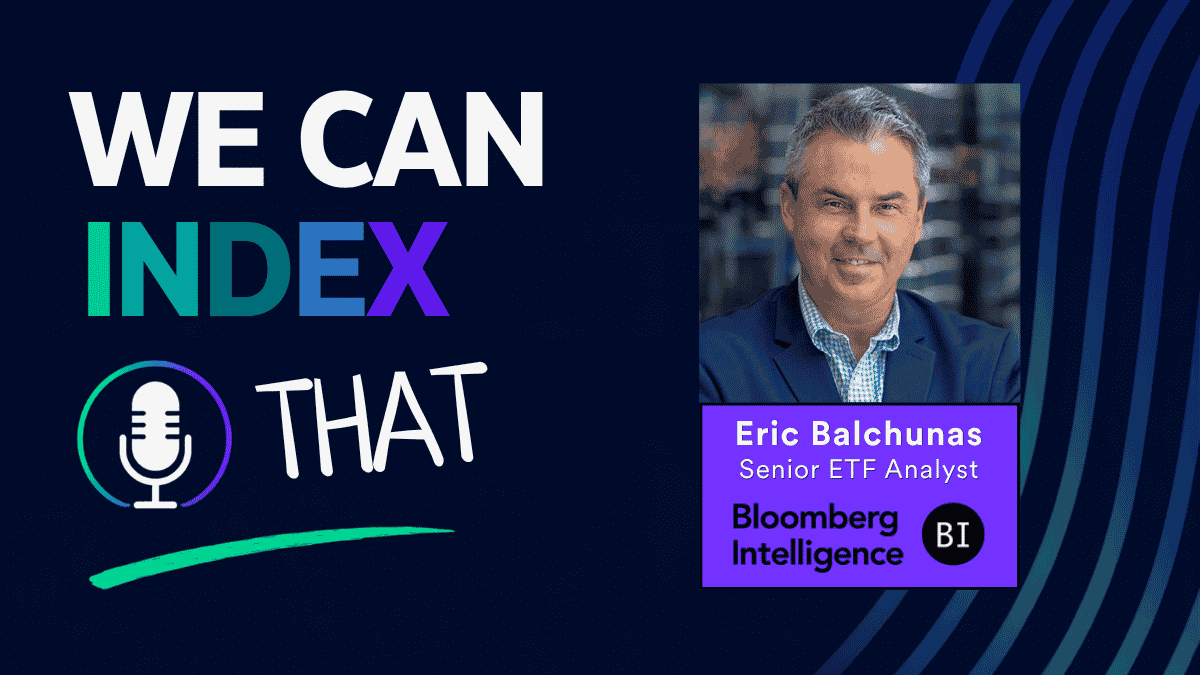
In the early 1990s, two competitors were trying to convince the investment industry to go global. Mark Sladkus was at MSCI, and Steven Schoenfeld was at IFC, the World Bank’s private-sector arm. Each was building an emerging market benchmark.
More than three decades later, they look back on how the asset class was built: touring international indexes around the US when only a handful of investors were going global, collecting index data by mail and phone before the internet, and watching the first single-country ETFs speed everything up. They also discuss how markets get classified as emerging, developed or frontier, and who has a say in those decisions. The conversation closes on a question index providers are still working on: how to stay diversified when a market becomes concentrated.
Key takeaways
- Index design is a series of trade-offs. Giving more notice of index changes helps passive managers, but it also gives others more time to trade ahead of them. Rules have to balance asset owners, active and passive managers, and the sell side.
- Classification is more than GDP. Economic development, size and liquidity, and access for foreign investors all shape whether a market counts as emerging, developed or frontier. That leaves room for judgment, consultation and, at times, lobbying.
- Single-country ETFs raised the bar. Trading during market hours made index providers handle corporate actions, transparency and consultation more rigorously.
- Concentration is the open question. When a few countries or one industry dominate a benchmark, diversification benefits narrow. Moving away from market-cap weighting is itself an active decision, with trade-offs of its own.
Listen and watch
Chapters
- 0:31 Intro
- 1:46 “Crickets”: International indexing in the 1980s
- 3:57 Why were emerging market indexes built?
- 10:42 When the assets arrived, what changed for index providers?
- 16:57 How the first country ETFs changed EM
- 20:35 Consolidation and the rise of All Country
- 24:17 Emerging, developed or frontier? Who decides?
- 27:53 How classification changes affect flows
- 34:47 Crisis after crisis: why is EM still standing?
- 40:43 Diversification, concentration and alternative weighting
- 43:47 Closing questions
- 47:55 Recap
About the guest
Mark Sladkus is Founder and President of Red Lighthouse Investment Management, a registered investment advisor. He was previously publisher and head of the index committee at MSCI, and he serves on the MarketVector Index Advisory Committee.
About the host
Steven Schoenfeld is CEO of MarketVector Indexes. He helped launch IFC’s investable emerging market indexes in the 1990s and is the author of Active Index Investing.
Disclaimer
Guest Mark Sladkus is a member of the MarketVector Index Advisory Committee. Reference to his firm is not an endorsement by MarketVector.
Index names and trademarks of other providers, including [S&P, FTSE, Russell and MSCI], are the property of their respective owners. MarketVector is not affiliated with, or sponsored or endorsed by, them. S&P 500® is a registered trademark of Standard & Poor’s Financial Services LLC.
This podcast is for informational and advertising purposes only. The views and opinions expressed by the hosts and guests are their own and do not necessarily reflect those of MarketVector Indexes GmbH and should not be considered investment advice. Opinions are current as of the date of recording and are subject to change with market conditions. Statements made during this podcast may constitute projections, forecasts, and other forward-looking statements, which do not reflect actual results.
Third-party information discussed is believed to be reliable but has not been independently verified.
It is not possible to invest directly in an index. Exposure to an asset class represented by an index is available only through investable instruments based on that index. MarketVector Indexes GmbH does not sponsor, endorse, sell, promote, or manage any investment fund or other investment vehicle offered by third parties that seeks to provide an investment return based on the performance of any index.
The mention of any security during this podcast is not a recommendation by MarketVector Indexes GmbH to buy, sell, or hold such security, nor should it be considered investment advice. Discussion of specific securities is neither an offer to sell nor a solicitation to buy. Third-party funds, products, and companies mentioned in this episode are referenced for informational purposes only and are not endorsed by MarketVector.
S&P 500® is a registered trademark of Standard & Poor’s Financial Services LLC. MarketVector is not affiliated with, or sponsored or endorsed by, S&P Dow Jones Indices.
Get the latest news & insights from MarketVector
Get the newsletterRelated: